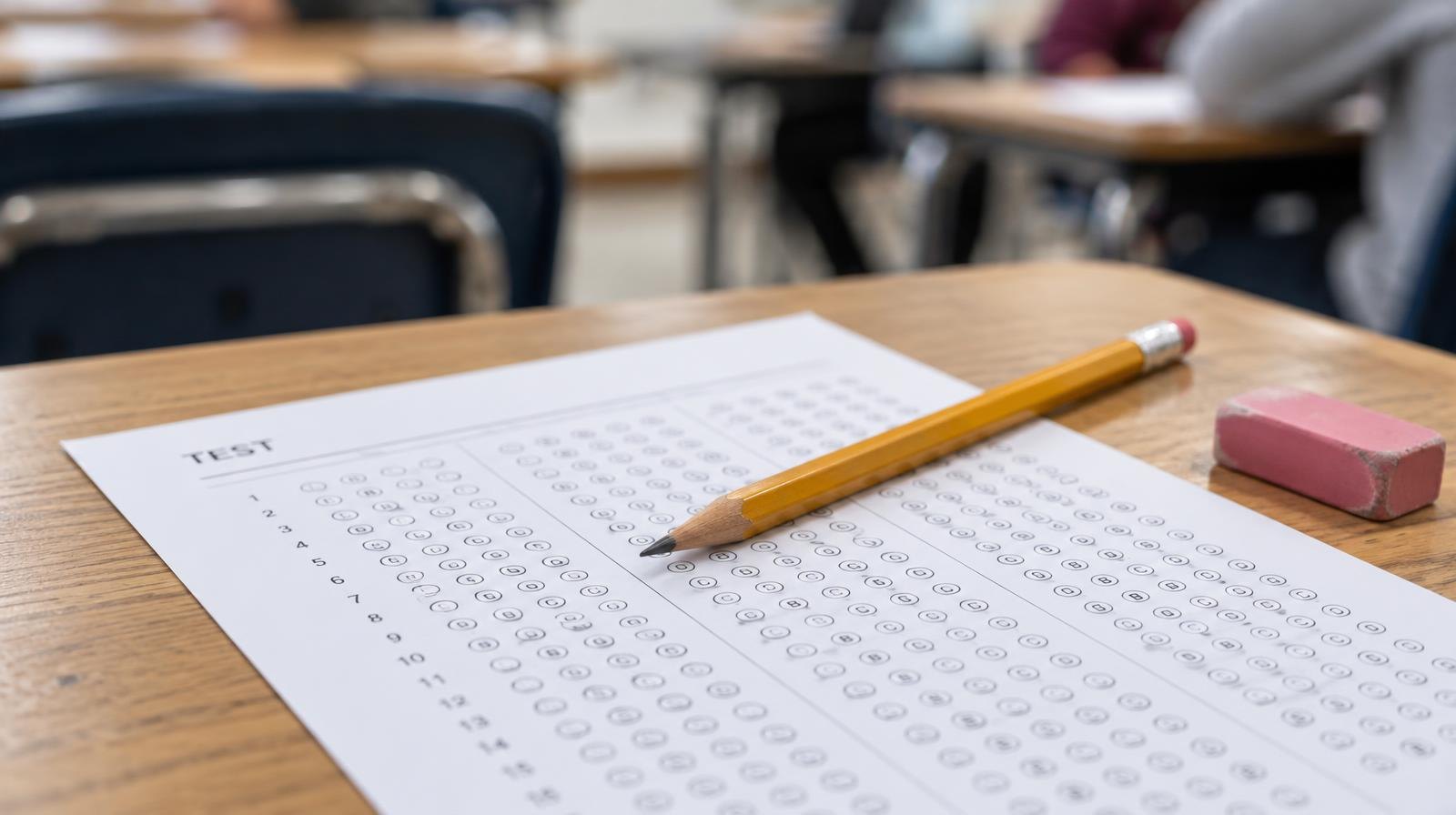
Students in grades 3 through 8 will spend less time on state math and science tests next spring under changes the Colorado Department of Education (CDE) announced Monday, Nov. 2.
The reduction affects every elementary and middle school student in Cherry Creek School District and Littleton Public Schools who sits for the Colorado Measures of Academic Success (CMAS). Fifth and eighth graders will see the biggest cut: 90 minutes off their total testing window, dropping from 11 hours to nine and a half. Students in grades 3, 4, 6 and 7 will lose 45 minutes, going from seven hours and 45 minutes to seven hours, Chalkbeat reported.
No test questions are being removed. Instead, the state is shrinking the time window and cutting math and science testing from three sessions to two, according to a CDE news release. Officials said data showed most students were not using all of the allotted time.
"Students didn't need as much time as they were given, so there were places where we could make cuts," Christina Wirth-Hawkins, CDE's chief assessment officer, told the State Board of Education at a recent meeting, according to Chalkbeat.
What it means for local families
Each spring, Colorado tests students in grades 3 through 8 in math and literacy, which includes reading and writing. Students in grades 5 and 8 also take a science exam. Littleton Public Schools serves portions of Centennial and Greenwood Village, according to district information. Both LPS and Cherry Creek families with children in those grades will see fewer testing days at schools that hold one session per day.
The changes amount to roughly a 23% reduction in maximum testing time per subject compared with 2026, according to CDE. Since 2015, the state has reduced total CMAS testing time by about 35% to 36% across grades 3 through 8.
Why time, not questions
The reductions stem from a study required by House Bill 25-1278, which the legislature passed in 2025. That study found that cutting questions from literacy tests would not shorten them much because students still need time to read passages. Removing questions altogether could reduce the precision of scores, the study found.
Computer adaptive testing would not save substantial time either, according to the study summary reported by Chalkbeat.
State Board Chair Rebecca McClellan raised a caution about going further. "If we keep shortening the test, we may be messing with the integrity of that information that truly is being valued," she said, according to Chalkbeat.
Board member Kathy Plomer asked what shorter windows mean for students who need more time and whether the change could increase test anxiety, according to Chalkbeat. Wirth-Hawkins said students spent an average of three hours on literacy tests in spring 2026, though four and a half hours were allotted. She said the 2027 testing time will remain above that average.
What comes next
CDE said it will monitor the spring 2027 changes and continue looking for ways to improve assessment efficiency. Fewer sessions will also simplify scheduling, proctoring and make-up testing for schools, the department said.
Board member Kathy Gebhardt said she hopes the underlying study data reaches state lawmakers who have pushed for further cuts, according to Chalkbeat.