Nearly half of documented immigration enforcement actions in Colorado now happen in public spaces, according to a new statewide report.
The Colorado Rapid Response Network (CORRN) published its 2025-2026 community report in October, drawing on data from its statewide hotline. As first reported by 9News, public-place enforcement rose from 37% of documented actions in 2025 to 48% between January and July 2026. Over the same period, the share of enforcement at homes fell from 30% to 20%.
The report tracks statewide trends, with enforcement hotspots in Aurora, Denver, Colorado Springs, Glenwood Springs and Durango.
It does not break out data for Centennial, Greenwood Village or Cherry Hills Village specifically.
But the findings carry weight locally: a Greenwood Village church lost its longtime priest to Immigration and Customs Enforcement (ICE) detention last year, and a proposed state constitutional amendment on the ballot could change how local police interact with federal immigration authorities.
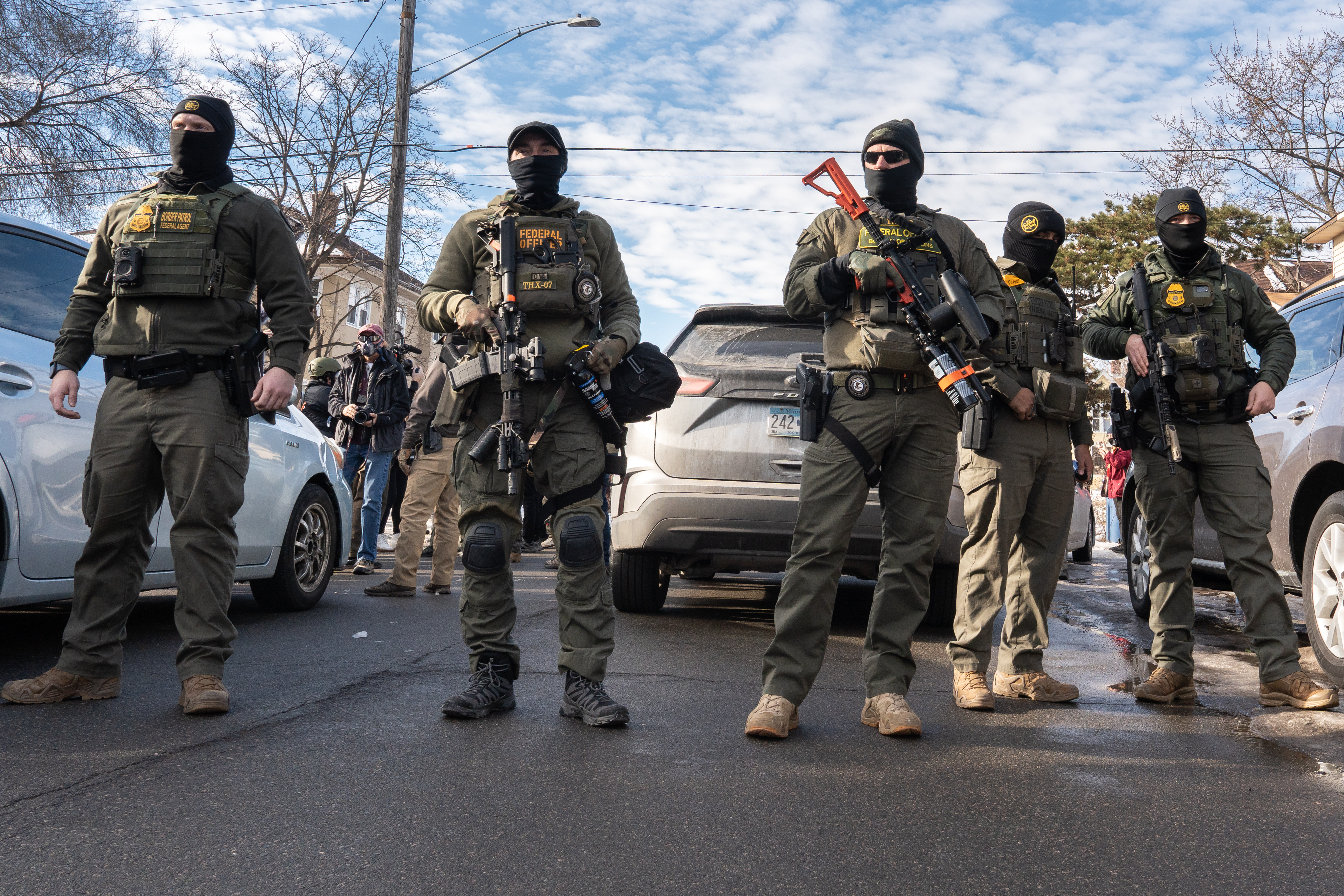
Jennifer Piper, program director for the Colorado office of the American Friends Service Committee (AFSC), told 9News that agents are stopping people during everyday activities.
"So, what we see in the data is oftentimes a person is being stopped on their way to work, on their way to their child's school, on their routine," she said.
Piper described agents using vehicles to box in drivers before making rapid arrests, with some operations over in minutes. She attributed the decline in home arrests partly to community education about constitutional rights.
The report also found that 82% of detainees interviewed through CORRN's documentation process reported no criminal record. Seventy-three percent reported having children. And 37% said they had pending immigration applications. CORRN acknowledged its data captures only a fraction of total ICE activity in the state, estimating it tracked roughly 6% of enforcement actions through July 31.
The geographic concentration of enforcement creates starkly different realities for neighbors living miles apart, according to Piper. In Denver, 20% of all hotline calls came from the Westwood neighborhood alone.
The enforcement landscape could shift depending on how Colorado voters decide on Amendment 81. As Denver7 reported, the measure would amend the state constitution to require local law enforcement to notify the Department of Homeland Security within 72 hours when certain people charged with crimes are in the country without legal status. Current state law limits what information local police and sheriffs can share with immigration authorities.
Closer to home, the case of Rev. Edward Nalwamba illustrates the human stakes. Nalwamba, a Ugandan priest who served at Resurrection Anglican Fellowship in Greenwood Village for about 15 years, was released in October after 13 months in ICE detention at an Aurora facility, Colorado Newsline reported. He had lived in Colorado for more than 25 years. His attorneys have filed a motion to reopen his asylum case, which remains pending.
CORRN operates a bilingual hotline at 1-844-864-8341, available around the clock, for anyone who witnesses ICE activity or wants to document an encounter. The full report is available in English and Spanish.