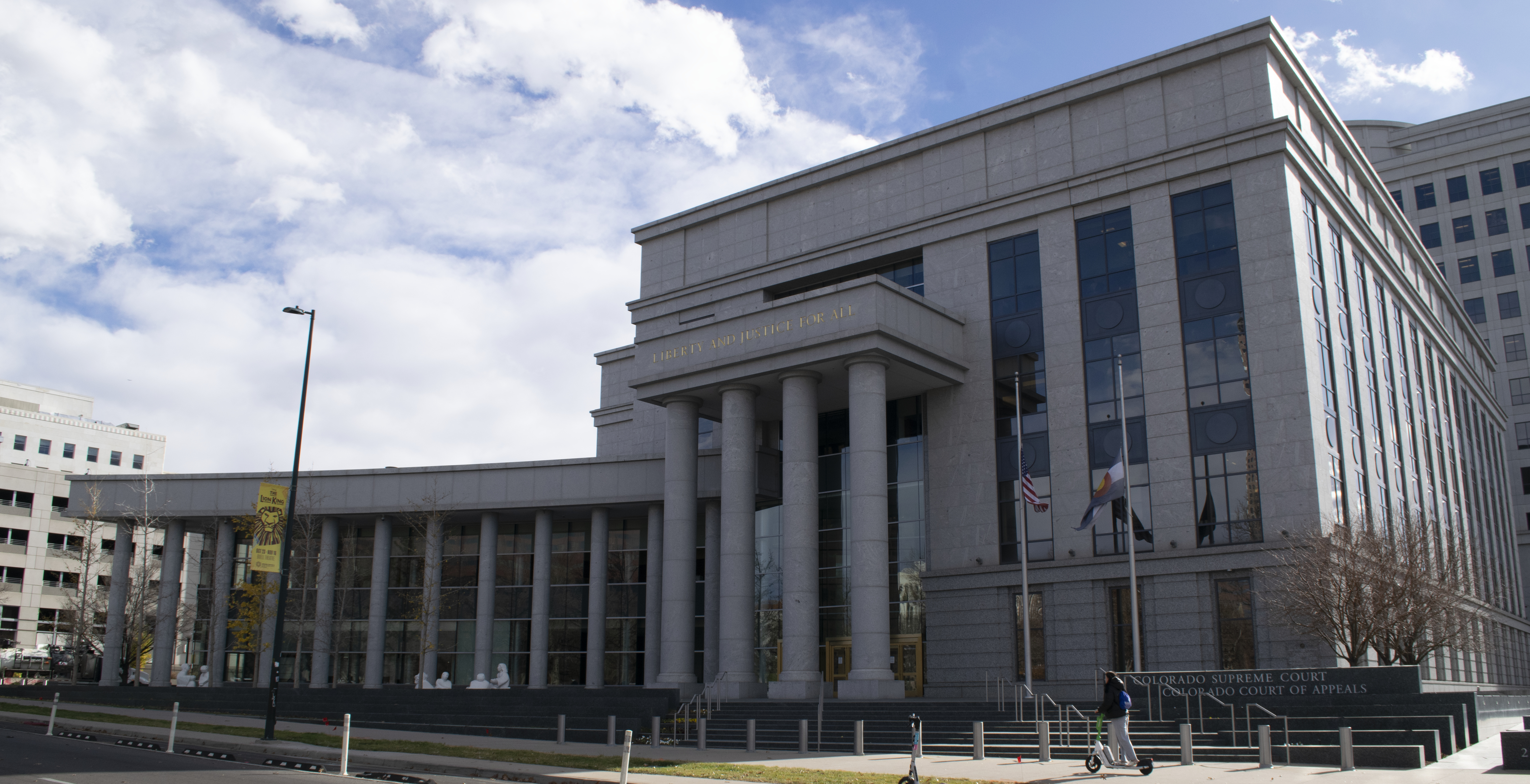
Amendment 87, the graduated income tax proposal, will appear on Colorado's Nov. 3 ballot after the state Supreme Court rejected the final legal challenge against it on Friday, Oct. 30.
The ruling clears the way for Centennial-area voters and residents statewide to decide whether to replace Colorado's flat 4.4% income tax with a six-bracket graduated system. The measure would cut taxes for individuals and small businesses earning less than $500,000 a year and raise them for those earning more, according to Denver7.
If approved, the change would generate an estimated $2 billion a year for healthcare, K-12 education and childcare, The Colorado Sun reported.
The legal fight
Michael Andre Hancock, an Arapahoe County resident, filed the original lawsuit in September against Secretary of State Jena Griswold and Amendment 87 proponents Chris deGruy Kennedy of the Bell Policy Center and Kiyana Newell of New Era Colorado. Hancock alleged violations in the signature-gathering process and challenged Griswold's review of the signatures, Denver7 reported.
A Denver judge rejected Hancock's effort to nullify votes already cast on the question. Hancock appealed to the Supreme Court, which affirmed the lower court's decision in a one-page ruling. The court said it would issue a full opinion "in due course."
Jason Dunn, an attorney for Hancock, called the ruling "disappointing as it leaves a system in which there will be little accountability for those who collect signatures and fail to follow the rules."
Chris deGruy Kennedy, president of the Bell Policy Center and co-chair of Protect Colorado's Future, said in a prepared statement: "Twice now, Colorado courts have said that more than 130,000 voters who signed this petition deserve to have their signatures count, and that Coloradans deserve to decide this question for themselves."
Griswold said she appreciated the court's "quick affirmation … [that] Amendment 87 was rightly certified to the ballot."
What Amendment 87 would do
The measure would scrap the state's flat 4.4% income tax and create six brackets. Revenue would flow to the Colorado Futures Account, a proposed fund for public education, healthcare and early childcare programs, Denver7 reported.
The brackets would not distinguish between single and joint filers, The Colorado Sun reported in an Oct. 28 FAQ. Some dual-income households could face higher state taxes if they file jointly rather than individually. The brackets also would not adjust for inflation, meaning more households would move into higher brackets over time.
Because the measure repeals rather than amends constitutional language, it needs only a simple majority to pass, according to the Greater Park Hi ll newsletter.
A potential conflict on the ballot
Voters will also see Proposition 136, which would cap individual and corporate income taxes at 4.4%. If both measures pass, the outcome is unclear. The state legislature or a court would have to resolve the conflict, according to the state's 2026 Blue Book, Denver7 reported.
Colorado Attorney General Phil Weiser, the Democratic nominee for governor, announced his opposition to Amendment 87 on Oct. 30, citing that conflict as a key concern. Weiser said if both pass but Proposition 136 gets more votes, a court could theoretically block the tax increases while allowing the cuts, potentially reducing state revenue by $600 million, The Colorado Sun reported.
Supporters of Amendment 87 say the brackets are structured to take effect in their entirety or not at all.
Election Day is Tuesday, Nov. 3.