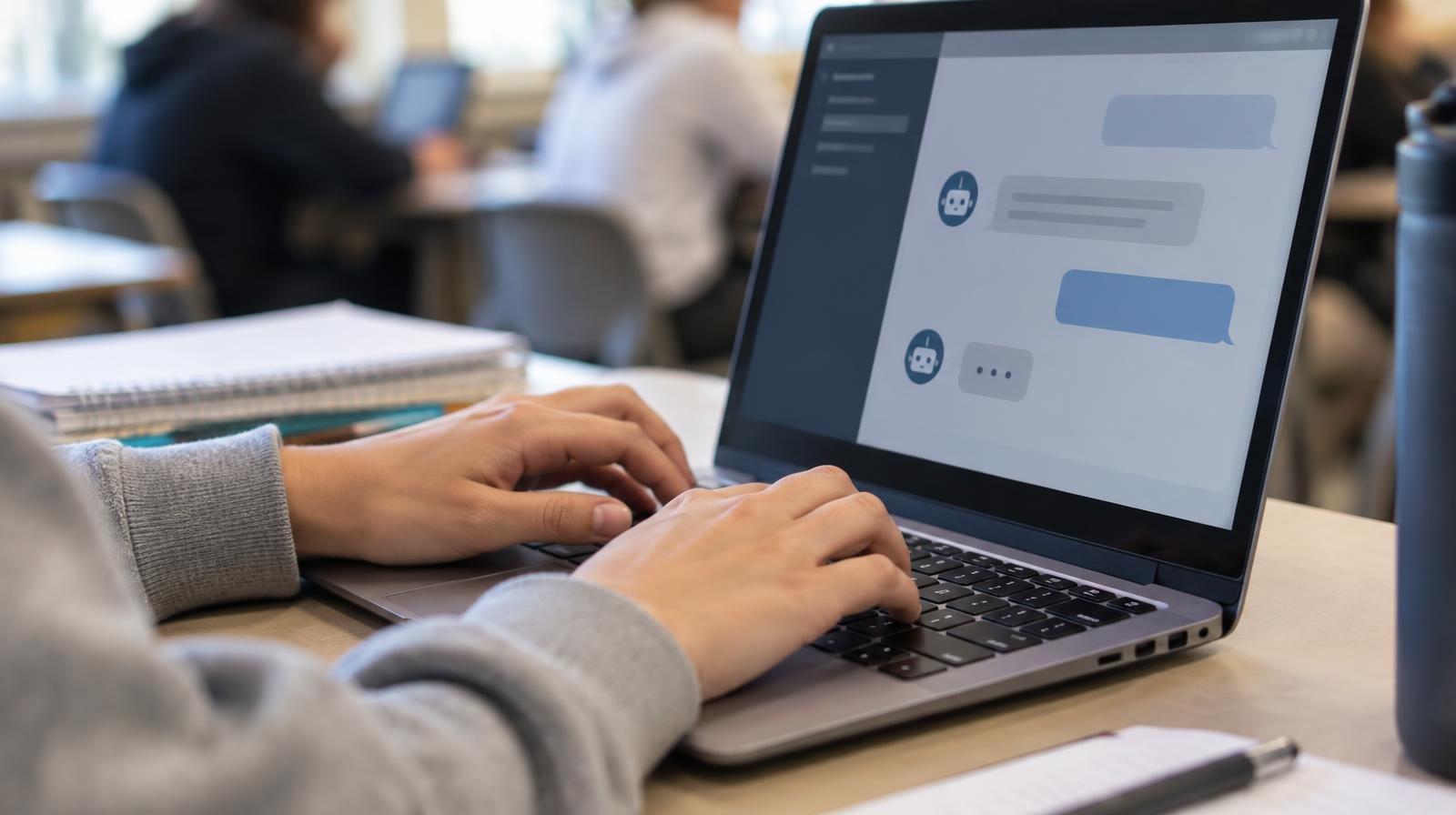
Google will turn off its AI products for K-12 student accounts by default and require school administrators to switch them on, the company announced Tuesday, Nov. 3.
The shift reverses a decision earlier in 2026 that caught many districts off guard when Google activated its Gemini chatbot for all students automatically, as Education Week reported. Chalkbeat reported on the Nov. 3 changes and the broader backlash driving them.
The change matters locally. Cherry Creek School District already approved Google Gemini Chat and Gemini Notebook for high school students, according to the district's AI resources page. CCSD made those tools available the week of Aug. 31 after a privacy and security review. The district requires all AI use to be teacher-directed.
What Guided Learning does
When administrators do turn on AI, students in Google Classroom will get Guided Learning instead of the standard Gemini chatbot. The feature walks students through problems step by step rather than handing them a finished answer.
Kevin McKee, a research scientist at Google DeepMind, told Chalkbeat that in education, students need to do the work themselves. "Good pedagogy requires guiding students through that productive struggle," McKee said.
Teachers can assign work through Guided Learning and review student chats to see how students approach problems. Students cannot switch back to regular Gemini within Google Classroom, according to Chalkbeat.
Google is also building Guided Learning into Search for student accounts. When the system detects a student looking for homework help, Search will prompt them through the topic instead of displaying a direct answer.
Rollout timeline
Google said it will test the Search changes with a small group of U.S. schools in November and expand more broadly early in 2027. Guided Learning in Google Classroom became available globally on Nov. 3, according to Google's blog post.
The new default-off controls for Gemini, Gemini Notebook, Gemini in Classroom and Google Search will roll out in coming months, Google said. The company plans to share specifics with schools ahead of the transition.
A tradeoff for districts
Schools that want no AI on their devices face a steep choice: they would have to give up Google Search entirely. Chris Phillips, Google's vice president and general manager of education, said AI is deeply integrated into Search and cannot simply be turned off, according to Chalkbeat.
Eisha Bush, head of teaching and learning at Common Sense Media, told Chalkbeat that avoiding Google Search is "really slim to none" for most schools. Bush also noted that regardless of changes inside Google Classroom, students still encounter AI overviews on personal devices and have easy access to other chatbots.
Common Sense Media rates Google Gemini K-12 as a "high risk" product. Reviewers found students could still get Guided Learning to do much of their work, according to Chalkbeat. "It will complete homework assignments and essays, and the boundary between 'helping' and 'doing the work' is often unclear," reviewers wrote.
What CCSD families should know
CCSD limits approved AI tools to high school students and requires them to sign in with district accounts, not personal ones. The district holds enterprise data protection agreements with Google and Microsoft that prevent student information from being used to train AI models, according to the district's AI resources page.
Work produced by AI and submitted as a student's own can be treated as academic dishonesty under CCSD Board Policy JICDA, the district states.
Google said it will share more details with schools before the default-off controls take effect.